
The illusion of protection: how UK legislation enables the killing of wild birds
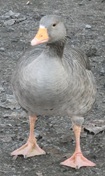
Greylag goose at The Mere
Newly released licensing data on lethal culling, and the current DEFRA consultation on quarry species, show that the extensive exemptions to the protection of wild birds in the Wildlife and Countryside Act 1981 are shaped less by ecological precaution than by entrenched interest. The result is a contradictory and archaic regime in which birds can be simultaneously protected and legally shot, with ethical considerations ignored
There had been a report in mid-February of some white-fronted geese (Anser albifrons) on a winter-flooded field next to the River Esk. The field was known to me, as it has salt marsh plants on its edges with the tidal estuary and tributaries, as well as in permanent and seasonal wet patches. As I had never seen white-fronted geese before, I headed off a week later but without any great hope that they would still be there. I got to my high lookout over towards this floodplain fen and it didn’t look promising. Nevertheless, I carried on down to the river, seeing a heron (Ardea cinerea) fly down the Esk and land on a muddy island in the middle of the estuarine flow at low tide. As I went along the path, I saw two more herons next to a ditch in the field on other side of the path. Eventually, I saw two heads bob up above a low bank in front of a shallow lake over on the far side of the field near the riverbank. I got to a point along the path where I could see through the hedge without the sun causing glare and there the geese were, about 150m away, scrabbling in and out of the lake. At first, I thought there were only four, but eventually I counted at least 11 geese as they came into view from behind that low bank. There were also a pair of teal (Anas crecca) on the grass in front of them, small dabbling ducks, the male having a chestnut coloured head with broad green eye-patch (1).
Problem of identification
White-fronted geese have a large white patch at the front of their heads that surrounds the base of their bill, bold black stripes across their belly, and orange feet (2-4). It’s a winter visitor to wetlands and coastal marshes in the UK from two separate summer breeding populations (see plot in (5)). The Greenland white-fronted goose (Anser albifrons flavirostris) subspecies breeds in W Greenland, has a migration halt (stopover) in Iceland, and over-winters in Scotland, N Ireland, NW England and N Wales, while the European white-fronts that breed in northern Russia and Siberia tend to remain in England to over-winter, in the East, South and Southwest (3). It is estimated that 10,000–12,000 Greenland white-fronts and 1,000–2,000 European white-fronts spend the winter months here in the UK (3). In reading up about these geese, I saw that it was red-listed on UK Birds of Conservation Concern (6) both populations having exhibited declines over 25- and 10-year time periods (see Table 1 in (7) and Fig 7.5, Ch 4, in (8)). What I hadn’t realised was that the goose was another victim of our deeply compromised nature legislation, the Wildlife and Countryside Act 1981, that although it begins by protecting all wild birds, their nests and eggs (see Section 1 in (9)) then proceeds to make exceptions by excluding some of those wild birds from that protection (see Section 2 in (9)).
Some wild bird species can be shot for recreational and harvesting purposes outside of a close season, the duration of that season varying on the species and the location where it is hunted. The close season is specified in the legislation, a broad indication being February to end of August (see 2(4) in (9)). This is the case for European white-fronted geese in England and Wales, as it is included in Schedule 2 Part 1 – “Birds which may be Killed or Taken Outside the Close Season” (see Schedule 2.1 in (9)). The Greenland white-fronted goose, however, is explicitly excluded from being shot by the wording of Part 1 of the Schedule. The latter begs the question of what differentiates between the two geese, how would a hunter know which type of goose it was shooting at? The British Association for Shooting and Conservation (BASC) does not differentiate on appearance, but believes that that there is minimal potential for range overlap due to the differences in localised distribution during the winter so that the risk of look-alike shooting of the Greenland white-fronted goose is small (see entry for European White-fronted Goose in (10)). One source suggests that the two geese can be differentiated by the colour of their bills, the European birds having pink bills, while Greenland birds have orange bills (4) although the certainty of differentiating this distinction seems to depend on the age of the goose and in the quality of light in which it is observed (11).
The bill colour of the geese in my photographs appeared to me at first to be orange, suggesting that they were Greenland geese that had over-shot their normal winter distribution, as the wet field is near the NE coast. A second look at my photographs made me less certain that the bill was orange, which could suggest they maybe European geese that had also overshot their winter distribution, but coming from a different direction. The geese had fetched up on that wet field in mid-February (see above). If they had turned up two weeks earlier, at the end of January, then it would have been before the start of the close season for shooting them if they were European white-fronted geese (see Section 2(4)(d) in (9)). The teal that I saw near the geese would also have been available to have been shot, as they too are listed as a bird which may be Killed or Taken in Schedule 2(1) of the legislation (9). Given that the white-fronted geese I saw where outside the expected distribution for either the European or Greenland goose, and their bill colour was not certain, what would be your decision about whether it would have been legal to shoot at them? I will come back to this issue of identity later, but I need first to explain more about how the legal slaughter of wild birds occurs.
Historical and ongoing culling of wild birds
I first wrote about the slaughter of wild birds over 20 years ago. I was shocked at the inescapable fact that wild nature in Britain has to co-exist with the needs of the dominant species, and if that co-existence is threatening to us, then we manage-out the threat in an often ruthless way, with no pause for contemplation of relative rights to life and freedom. I gave the examples of the senseless culling of badgers; the management of native deer populations; the declining populations of snakes and lizards due to the increasing number of young gaming birds being released each year to meet the needs for sport shooting; and the call for cormorant (Phalacrocorax carbo) populations to be managed due to their impact on fresh water fish (12). I noted that there was a malign thread to our disdain for wild animals, and which needed uncompromising advocates who stood up for the dignity of wild animals.
A year later, I was appalled to see news that Government had invited licence applications for a second culling season for cormorant in a row that was set at 3,000 birds ((13) and see (14)). Policy on culling cormorants had shifted in 2004 to allow for a significant increase in the number of cormorants that could be killed under licence. I noted that although only 1,200 out of the maximum of 3,000 were reported to have been shot in that first season, that in itself was a large increase on the previous cull limit of 500 birds. It was the increasing occurrence in England of a subspecies (Phalacrocorax carbo sinensis) arising from the Low Countries and Germany, and which favoured inland rivers and lakes, rather than coastal locations of our subspecies (Phalacrocorax carbo carbo) that made cormorants an easy target for the prejudice of anglers and their artificial, fish-stuffed environments. There was no indication though, that there would be any attempt to differentiate during culling between the two subspecies. In addition, a government study had the year before modelled the effect of culling on the cormorant population and found that at an annual cull level of 2,000 birds, the cormorant population was predicted to fall by 25% over five years of culling but remain stable. However, it found that any annual cull over 2,000 birds and the cormorant population would be predicted to show a disastrous decline in the equilibrium population to the point of extirpation. So why was the Government ignoring its own research and licensing an annual cull of 3,000 cormorants?
The licenced culling of cormorants led me onto some digging into the General Licences GL04-GL06 that landowners could make use of without having to apply for them, were renewed each year, and which allowed for the regular slaughter of pest birds such as the corvids (crows, carrion crows, rooks, jackdaws, jays and magpies) for the purposes of various self-interested justifications. It was a depressing picture that I never pursued, but should have, as I should also have kept track of what was happening to cormorants, considering that I get so much pleasure from observing them now (15). Fortunately, over a decade later, Wild Justice, a campaigning non-profit company, launched a successful legal challenge to the three General Licences in 2019 on the basis that Natural England had failed to comply with a condition under the power to grant those licences in the Wildlife and Countryside Act 1981 that it should not grant a licence for any of the purposes unless it was satisfied that there was no other satisfactory solution ((16) and see Section 16(1A) in (9)). The lawsuit provoked Natural England to voluntarily revoke the three General Licences, requiring as an interim measure anyone wanting to kill any of the species formerly listed on those licences to apply for and receive an individual licence from Natural England until a review of the General Licences was completed and a new system put in place (17). Under the new licence system devised since then, GL40-42 replace GL04-GL06 (18).
Birds of conservation concern can still be shot
I moved to live near a floodplain a few years ago, where greylag geese (Anser anser) became a favourite winter visitor to the flooded fields, and a welcome presence in the face of the ubiquitous, noisy flocks of non-native Canada geese (Branta canadensis). By chance, I read an article by Jason Endfield, a journalist, blogger, and environmental campaigner, about bird control licences issued by Natural England in 2021 and which mentioned greylag geese (19). Endfield had successfully pressured government agencies like Natural England to publicly release annual data on the "lethal control" of wildlife, which was previously hidden. I was shocked to see Endfield write that as, in previous years, amber-listed greylag geese (6) had been “a particular casualty of the licensing system again during 2021, with hundreds of the birds on the kill list and hundreds more of their eggs licenced for destruction, with reasons ranging from preserving public health and safety to preventing serious damage to crops”
I searched for more information of this culling of greylag geese, and found the most up to date spreadsheet that listed the licences issued by Natural England for the lethal control of birds between 2014 to 2025. A total of 1,094 licences had been issued for the shooting or destruction of eggs or nest of 131,604 greylag geese (20). The reasons for the issue of the licence were classified under the relevant part of the wildlife legislation that allows exceptions to the protection of wild birds (see Section 16 in (9)) and were as follows:
76 licences covering 15,093 greylag geese
were issued for the purposes of conserving either flora and fauna under
Section 16(1)(cb) or wild birds under 16(1)(c);
10 licences were issued for 2,080 geese for the purposes of falconry or
aviculture under 16(1)(e);
57 licences were issued for 4,641 geese for the purpose of protecting
air safety under 16(1)(i);
378 licences for 64,556 geese were issued for the purposes of
preserving public health under 16(1)(i);
17 licences were issued for 1,530 geese for the purpose of preventing
the spread of disease under 16(1)(j);
414 licences were issued for 40,386 geese for the purposes of
preventing serious damage to crops, vegetables or fruit, or for purposes of
preventing serious damage to livestock, foodstuffs for livestock, both
purposes coming under section 16(1)(k).
You may like to know that I also checked on the licences for cormorants and found that 5,098 had been issued between 2014-2025 for 34,486 cormorants, of which 4183 licences for 28,367 birds were for the purpose of preventing serious damage to fisheries or inland waters under section 16(1)(k) and 916 licences for 5,849 cormorants for the purposes of preventing serious damage to livestock, foodstuffs, fisheries etc, also under 16(1)(k). It was a relief to find that no teal or white-fronted geese were licenced for slaughter, but there were 447 licences issued for 1,809 herons during 2014-2025, the most – 332 licences for 1,313 heron - being for the purpose of preventing serious damage to fisheries or inland waters, under section 16(1)(k). Who would ever shoot a heron? Who would ever shoot any of these wild birds.
The paradox of Quarry Species
Cormorants are fortunate, as if that can be said
when so many are slaughtered, that they are not a quarry species – they
are not listed like teal or white-fronted geese, as a bird that can be Killed
or Taken in Schedule 2(1) of the wildlife legislation that allows for their
unlicenced recreational slaughter outside of a close season. As Endfield
noted, the “unfortunate greylag is also a quarry species and so a
target for hunters who are permitted to shoot the birds during the open
season”. Endfield saw this as the “strange anomaly that can exist in
the world of (so-called) conservation, where a species of concern can still be
a target for both government sanctioned culls as well as recreational
killing”. It opened up a world I was barely aware of. Back in 2007, in an
article about the hypocrisy of the Royal Society for the Protection of Birds (RSPB)
for shooting foxes, I noted that it also had wildfowling tenants on
its
reserves at Frampton Marsh (RSPB, Lincolnshire) Ouse Washes (RSPB,
Cambridgeshire), Tetney Marshes (RSPB, Lincolnshire) and it let sporting
rights at the Langstone Harbour RSPB reserve to Langstone & District
Wildfowling & Conservation Association (21). The following year, I remarked on
a newspaper report that showed this hypocrisy of the RSPB. Robert Hill, a keen
birdwatcher and conservationist, was reported to have been horrified when he
discovered a dead wigeon (Anas penelope) covered in pellet wounds at
Langstone Harbour near Portsmouth, one of the RSPB's reserves, and where
thousands of migrating Arctic birds, including ducks and geese, spend the
winter (22,23). He subsequently found out that the RSPB allows the Langstone &
District Wildfowlers & Conservation Association to shoot up to 10 birds a day
between September and January on two of five islands in Langstone Harbour. He
said:
"I don't think it's acceptable. It's a blood sport. I can't see any
justification for it. It's a macho, egotistical, self-gratifying act and I
think it's disgusting. No-one owns wildlife. These poor animals come in for
sanctuary and end up getting blown out of the air"
I saw a mass of wigeon, a duck with yellow forehead and contrasting chestnut head and neck, at a distance in October last year amongst hundreds of birds on the vast mudflats of the mile-wide Budle Bay in Northumberland (15). The previous October, I had seen flocks of golden plovers (Pluvialis apricaria) in their winter plumage of light brown and white on low-tide rock terraces off Seahouses in Northumberland. I find now that both wigeon and golden plover are quarry species listed as a bird which may be Killed or Taken in Schedule 2(1) of the Wildlife and Countryside Act 1981 (9). It sickens me now to realise that if those birds had been a few miles further up the coast, then they would have been in the wildfowl shooting zones of the Lindisfarne National Nature Reserve (see map on pg. 8 in (24)) and could have been shot as I had seen them outside of the close season for these two birds that ended on 31 August (see Section 2(4)(c) and 2(4)(d) in (9)). The Lindisfarne Wildfowling Management Group Report shows that 293 wigeon, 73 teal, 10 greylag geese, but mercifully no golden plovers, were shot during the 2024/2025 season (see Bag breakdown on pg 14 in (24)). There were also 52 pink-footed geese (Anser brachyrhynchus) and 3 pintail ducks (Anas acuta ) that were shot, species I have always hoped to see at Budle Bay, but which are also quarry species. You may wonder why Natural England makes 200 permits available every season to allow wildfowling to take place on the Lindisfarne National Nature Reserve, and which BASC says “offers a truly unique experience” (25).
Lindisfarne is but one of 33 wildfowling opportunities around the coasts of Britain and N Ireland, often associated with BASC-affiliated clubs, but there are also other National and Local Nature Reserves, as well as National Trust, and RSPB ownings such as used by Langstone and District Wildfowlers and Conservation Association (see above) within that number (see map, key, and club/reserve information ppg 6-22 in (26)). There may also be areas of the foreshore other than those 33 where leases for sporting rights exist that allow wildfowling (see pg 24 in (26). It bodes a winter recreational slaughter that I suppose I shouldn’t have been surprised at, given how many archaic practices persist. It bites hard, though, when you realise that many delightful species of wetland birds that you might expect to see at a freshwater lake, are also quarry species. One such place is The Mere, south of Scarborough, that I immensely enjoy visiting, and where you could have seen the quarry species like coot (Fulica atra) goldeneye (Bucephala clangula) moorhen (Gallinula chloropus) mallard duck (Anas platyrhynchos) pochard (Aythya farina) shoveler (Anas clypeata) and tufted duck (Aythya fuligula) (27). Who would shoot a moorhen, or a tufted duck, or any of these other species?
If that is not madness enough, greylag goose, mallard duck, moorhen, white-fronted goose, and wigeon are listed by Natural England as birds of conservation concern in England for which a general licence GL40 can be used to “take action against target bird species to help conserve those birds of conservation concern” - take action means to kill (28). So, birds can be shot under a general licence allegedly to protect other birds, which are of conservation concern, but these birds of conservation concern are quarry species that can be shot outside of the close season. We also know that greylag geese are shot under licence for a range of purpose detailed above, and I can confirm that 39,253 mallard, 10,805 moorhen, and 330 wigeon, but no white-fronted geese, were licenced for killing between 2014-2025 (20). If these quarry species are birds of concern, why not just remove them from being quarry species as well as prevent them from being killed under licence? Even if not birds of conservation concern, why are other quarry species subject to slaughter under licence, such as the 3,500 coot and 300 tufted ducks between 2014-2025?
DEFRA’s consultation on Quarry Species
As to the latter, Jason Endfield launched a petition in June 2018 to stop the legalised killing of ~65 species of wild birds in the UK through the licensing system, many of which are red and amber listed and thus endangered, and to get Natural England to examine future licences and “ensure that they are not issued for spurious and/or vague reasons” (29). The petition has now attracted over 400,000 signatures. Pressure from this campaign has resulted in establishing an annual declaration from Natural England, detailing every licence issued during the previous twelve months and adding to a cumulative list since 2014 (see above) as well as NatureScot releasing wildlife licensing data for public scrutiny on a regular basis (see Document downloads in (30)). It has also helped to secure the withdrawal of most licences issued to harvest the eggs of Black-headed Gulls (Chroicocephalus ridibundus) for human consumption. Black-headed gulls are amber listed (6).
To the former, you now have the opportunity to have a say about the quarry species through a consultation launched towards the end of March by the Department for Environment, Food & Rural Affairs (DEFRA). The Press Release said that the consultation would be on new proposals to restrict recreational shooting of threatened wild birds by better protecting six of them (31). As the non-profit Protect the Wild noted, there was the dread phrase “recreational shooting of European White-fronted Goose” in the press release (32). Protect the Wild was better at counting as it noted that there were proposals for nine species included in the consultation: one goose, three ducks, three shorebirds (or waders) Wood Pigeon, and Woodcock. As well as choosing just those species, DEFRA was seeking approval of their pre-formulated changes in the proposals. At least, though, in the case of this goose, and two of the ducks, the proposal was to remove European white-fronted goose, pochard and goldeneye from Schedule 2.1 so that it would no longer be a quarry species in England and Wales, and remove the waders coot and golden plover only from Schedule 2 Part 1 for Wales. The third duck, the pintail, would be removed from Schedule 2.1 for England, but it would remain a quarry species in Wales, albeit with its close season extended. For the third wader, snipe (Gallinago gallinago) the proposal was to remove it from Schedule 2.1 for Wales, but extend its close season for England. In terms of Scotland, pochard would be removed, and goldeneye and pintail would have their close season extended. The woodcock would have its close season extended in England, Scotland, and Wales, while woodpigeon would be added to Schedule 2.1 as a new quarry species in England, Scotland, and Wales. As you can see, there is nothing on removing greylag goose, pink-footed goose, mallard, moorhen, tufted duck, teal or wigeon.
Both Wild Justice (33) and Protect the Wild (32,34) provide guidance on how to respond to the consultation, which is open until 17 May and with results and feedback expected on 10 August (35). Response to the consultation is online, but it is worth considering downloading and reading the consultation before answering the questions in your response, since some rationale is provided for each proposal, and there are links within the document to the full scientific advice that the statutory conservation agencies provided (36). These are worth reading as they provide a fuller reasoning than is present in the consultation document. For instance, the advice on European white-fronted geese that Natural England provided made the point that while “subpopulations could be distinguished in good light conditions with appropriate optical equipment” (and see above) there was “considerable potential for misidentification in a shooting/wildfowling situation which could lead to accidental shooting” (37). The recommendation was to remove it from Schedule 2 Part 1 for England based on the precautionary principle in protecting it from accidental shooting of the Greenland white-fronted goose. The advice on European white-fronted geese from Natural Resources Wales made the same point on the precautionary measure of minimising accidental shooting of the globally endangered but similar Greenland white-fronted goose in making its recommendations of removing it from Schedule 2 Part 1 for Wales (38). This important point of the potential for misidentification is alluded to in the consultation document (36) but what it doesn’t say is that both species of white-fronted geese used to be listed in Schedule 2 Part 1 for England and Wales, but the Greenland white-fronted goose was removed in 2020 by a Statutory Instrument because of its deteriorating conservation status (see (37,38) and Section 2 in (39)). So, this issue of misidentification could not have been foreseen in 2020 and both species removed then? It smacks of tinkering rather than thoughtfulness, and could suggest that maintaining the interest of recreational hunting was a factor that outweighed protection of wild birds.
Just one more example. The recommendation for snipe to extend the close season from 12 August to 30 September in England and Scotland is predicated on reducing any possible impact of hunting on the largely resident and declining English breeding population and their offspring, so facilitating recovery of the breeding population, and with a similar rationale for Scotland, but without referring to hunting (see pg 20 in (36)). The advice on snipe from Natural England, however, noted the prolonged breeding season of a largely resident and declining English breeding population (40). The implication of its recommendation was that the extension of the close season was needed to reduce any possible impact of an overlap of hunting with breeding birds still nurturing their offspring. This tinkering with close season dates when they fail to capture a potentially safe period when a wild bird can be slaughtered is a nonsense. It is a denial of the life history of a wild species that should never be put at risk in the first place just for the bloodlust of recreational hunters.
You could wade through all the rationales and questions on each species, trying to pick the answer that would result in the least damage to the species, or object to what is proposed, as provided in the guidance from Wild Justice and Protect the Wild, but as Protect the Wild says “Clearly, the way to give ‘iconic’ birds proper protection is to stop shooting them full stop” (34). If you believe that, then both Wild Justice and Protect the Wild point to Question 6 for the opportunity to say what you think about Governments facilitating recreational shooting for wild birds (see pg 36 in (36)). The first part of Question 6 asks whether “you think any other species should be removed from Schedule 2.1 in England, Wales or Scotland?” You could answer all of them. The second part of Question 6 asks whether “other amendments (for example an extension or shortening of a close season be made with regard to any other species listed on Schedule 2.1 in England, Scotland or Wales?”(Missing parenthesis!) If you feel strongly about recreational shooting of wild birds, then answering no other species than those already mentioned is inadequate. Don’t answer the third part of Question 6 that asks whether “any other species be added to Schedule 2.1 in England, Scotland or Wales?” unless you want to reiterate that you don’t want any of them on Schedule 2.1.
The broader ethical argument
I don’t bird watch, I notice and listen. I came to an appreciation of wild birds, mostly waterbirds, coastal, and seabirds, later in life with the interest in observing their behaviour and their chosen locations, their intrinsic properties, to better understand their life histories, because it is absorbing (15,41,42). I hate the fact that our legislation to ostensibly protect wild birds is riddled with compromise that only works to their disbenefit. We are trapped in this insanity by archaism. It is the refusal to recognise the principle that wild nature has a fundamental right to existence that outweighs our exploitation of it, especially this odious recreational hunting of wild birds, and their slaughter under licences for dubious reasons.
Mark Fisher 24 April 2026
(1) Teal (Anas crecca) BTO
https://www.bto.org/learn/about-birds/birdfacts/teal
(2) White-fronted goose, The Wildlife Trusts
https://www.wildlifetrusts.org/wildlife-explorer/birds/waterfowl/white-fronted-goose
(3) White-fronted Goose, BTO
https://www.bto.org/learn/about-birds/birdfacts/white-fronted-goose
(4) White-fronted Goose, RSPB
https://www.rspb.org.uk/birds-and-wildlife/white-fronted-goose
(5) Greater White-fronted Goose, Bird Migration Atlas
https://migrationatlas.org/node/1789
(6) Birds of Conservation Concern 5, December 2021
https://www.bto.org/sites/default/files/publications/bocc-5-a5-4pp-single-pages.pdf
(7) Frost, T.M, Calbrade, N.A., Birtles, G.A., Feather, A., Hiza, B.M., Caulfield, E.B., Balmer, D.E., Peck, K., Wotton, S.R., Shaw, J.M. & Woodward, I.D. 2026. Waterbirds in the UK 2024/25. BTO/RSPB/JNCC/NatureScot British Trust for Ornithology,
(8) Wild bird populations in the UK and England, 1970 to 2024, Accredited official statistics. DEFRA 23 September 2025
(9) Wildlife and Countryside Act 1981 c.69
https://www.legislation.gov.uk/ukpga/1981/69
(10) A code of practice for wildfowl quarry species. BASC
https://basc.org.uk/wildfowling/advice/sustainable-shooting-code-of-practice/
(11) Grey Goose Identification - Part One -Greenland vs Russian White-fronted geese, Cian Cardiff, The life of an Irish birder 23 January 2021
https://lifeofanirishbirder.blogspot.com/2020/01/winter-birding-greenland-vs-russian_13.html
(12) The Dignity of Wild Animals, Self-willed land February 2004
www.self-willed-land.org.uk/articles/wild_animals.htm
(13) Beavers and boars: a wild animal update, September 2005
http://www.self-willed-land.org.uk/articles/boar_beaver.htm
(14) Government accused over cormorant cull, Simon Jeffery, Guardian 31 August 2005
https://www.theguardian.com/environment/2005/aug/31/conservation.uk
(15) Noticing nature, Self-willed land December 2025
www.self-willed-land,org.uk/articles/noticing_nature.htm
(16) The Wild Justice legal challenge to the general licences GL04, GL05 and GL06, Wild Justice 10 May 2019
(17) General licences for bird control: major changes to licensing requirements, Natural England New Story 23 April 2019
(18) Kill, take or disturb birds, Bird licences, Natural England and DEFRA 19 February 2026
https://www.gov.uk/government/collections/bird-licences
(19) Birds In Peril - Natural England Data Reveals Ongoing Destruction, Jason Endfield 12/3/2022
(20) Licences for the control of birds 2014 to 2025 – Lethal control, Natural England
(21) They shoot foxes, don't they? Self-willed land January 2007
www.self-willed-land.org.uk/articles/shoot_foxes.htm
(22) RSPB criticised over shooting on reserve, Paul Eccleston, Daily Telegraph 11 January 2008, Ssenredliw, Self-willed land March 2008
www.self-willed-land.org.uk/articles/Ssenredliw_2008.htm
(23) RSPB criticised over shooting on reserve, Paul Eccleston, Daily Telegraph 11 January 2008
(24) Lindisfarne National Nature Reserve, The Lindisfarne Wildfowling Management Group Report 2024/2025
https://basc.org.uk/download/392104/?tmstv=1776933366
(25) The wildfowling wonders of Lindisfarne, BASC 5 September 2023
https://basc.org.uk/the-wildfowling-wonders-of-lindisfarne/
(26) WILDFOWLING Permits and handbook, BASC 2025/2026
https://basc.org.uk/download/363334/?tmstv=1700487365
(27) Scarborough Mere Bird list, eBird
https://ebird.org/hotspot/L12955553/bird-list
(28) List of birds of conservation concern and woodland birds of conservation concern, Natural England Statutory guidance 1 January 2026
(29) STOP THE LEGALISED KILLING OF WILD BIRDS IN THE UK, Change.org
https://www.change.org/p/stop-the-legalised-killing-of-the-uk-s-treasured-wild-birds
(30) Summary of Licensing Data, NatureScot
https://www.nature.scot/doc/summary-licensing-data
(31) Stronger protections to help protect threatened wild birds, Department for Environment, Food & Rural Affairs Press release 23 March 2026
https://www.gov.uk/government/news/stronger-protections-to-help-protect-threatened-wild-birds
(32) The Government Is Deciding Which Birds Can Be Shot And You’re Supposed to Stay Quiet, Protect the Wild, Apr 12, 2026
https://protectthewild.substack.com/p/the-government-is-deciding-which
(33) Respond to Defra’s consultation on shooting seasons, including for Woodcock, Wild Justice April 5th, 2026
(34) Defra: Consultation on Amending the Wildlife and Countryside Act 1981, End Bird Shooting 4 March 2026
https://endbirdshooting.substack.com/p/defra-consultation-on-amending-the
(35) Protecting wild birds: Consultation on Amending the Wildlife and Countryside Act 1981 which allows certain species of wild birds to be killed or taken outside of their close seasons. DEFRA,
(36) Protecting wild birds: Consultation on Amending the Wildlife and Countryside Act 1981 which allows certain species of wild birds to be killed or taken outside of their close seasons, Consultation Document, DEFRA, Scottish Government, Welsh Government 23rd March 2026
(37) Schedule 2 Species Assessment Proforma – White-fronted goose, January 2026 – Natural England Technical Advice to Defra – Schedule 2
(38) European White-fronted Goose Anser albifrons albifrons, Schedule 2 Consultation: Wales species assessment, Natural Resources Wales 19 February 2026
(39) The Wildlife and Countryside Act 1981 (Variation of Schedule 2) (England) Order 2020 No. 245
https://www.legislation.gov.uk/uksi/2020/245/made
(40) Schedule 2 Species Assessment Proforma – (Common) Snipe, January 2026 – Natural England Technical Advice to Defra – Schedule 2
(41) A natural life – the self-will of existence, Self-willed land August 2024
www.self-willed-land.org.uk/articles/intrinsic.htm
(42) The ecological integrity of ancient woodlands, Self-willed land May 2025
www.self-willed-land.org.uk/articles/cock_mill_larpool.htm
url:www.self-willed-land.org.uk/articles/quarry_species.htm
www.self-willed-land.org.uk mark.fisher@self-willed-land.org.uk