
Curlew conservation beyond predator control: ecological integrity, ethics and landscape recovery
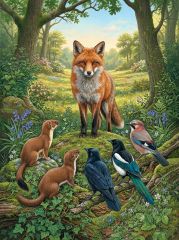
Curlew decline is being framed too narrowly through predation, while deeper causes lie in habitat change, land-use systems, and conservation ethics. The gamebird industry is only too pleased to hide behind wading birds to justify predator control as beneficial to species perpetuation, but there are no special exceptions to any moral ethic that can be made to this unholy alliance
I went up to the Northumberland coast in late September and there were some astonishing sights: a mass of juvenile gannets diving into enormous waves close to the rocky promontory of Beadnell Point; many seals joining gannets in a fishing frenzy; murmurations of golden plovers before settling on Emblestone, an offshore exposed reef; and of course, lots of star ascidian sea squirts. The diversity of coastal birds in Northumberland was high: I saw dunlin, ringed, golden and grey plover, turnstone, redshank, bar-tailed godwit, eider, oyster catcher, terns, heron, cormorant, rock pipit, black-headed gull, and curlew. It seemed like there were curlews (Numenius arquata) foraging every day on the low tide rock terraces, from Lady’s Hole, Collith Hole, Comely Carr and Whinstone Dyke near Beadnell, to Harkness Rocks near Bamburgh, and on the mudflats in Budle Bay. When I got back, I came across a call from the British Trust for Ornithology (BTO) for volunteers to take part in a coastal bird survey. It was to count on one day in either December or January of all the wildfowl and wader species in the intertidal zone in selected 2km sections of the coastline (1). I clicked on the Vacant Sites map to see if there were any sections near me still available, and was pleased to see that two priority sections either side of Saltwick Nab near Whitby were, and so I requested those (2). Whenever there is a good low tide, Saltwick Bay is always one of my destinations for sea squirt hunting, as well as noticing the shore birds, seals and other marine life.
I did a practice survey at Saltwick Nab a few weeks ago, on a day with a low tide of 0.8m. I needed to work out a walking route on the rock terraces exposed at low tide that would enable me to observe the areas I know from experience will have a presence, but without disturbing any of the birds. I have an instinct for that now, especially for curlews, having observed the sensitivity of shorebirds to human disturbance last year in Northumberland and compared it to what I had experienced locally (3). Curlews, as I noted, show high sensitivity to human disturbance, and vocally complain with an alarm call if I as much as turn in their direction. Rampaging dogs create even worse disruption.
On the day of the practice, I saw curlews, purple sandpipers, herring and black-headed gulls, oyster catchers, and one each of rock pipit, crow, and blacked-backed gull. Apart from a lone curlew on the main terrace edge that abuts onto the bay, there were two, separate foraging groups of 12 and 13 curlews along with other birds, both on outer terraces that are below Mean Low Water. These will therefore be exposed for a shorter time at low tide (for locations and species counts see the schematic). I was going to leave it at that, and have coffee sitting by the Nab, but I went back to the main terrace edge, dropped down and went along past the dispersed rocks to look for sea squirts in the shade of overhangs. I saw a rock pipit on top of a rock, but found only some breadcrumb sponge in the overhangs. I needed somewhere out of the wind to sit for coffee, and that’s when I stumbled across an astonishing patch of orangey-brown star ascidian just a few feet away from the main terrace edge. The overall size of the patch was large, with its three separate tunicate colony areas filled with star-like groups of six to 10 zooids each having a red spot, the group arranged around a shared exhalant siphon.
The distance that I had to maintain from the waders stretched the ability of the zoom on my camera, and so I will have to take binoculars as well when I do the proper count. I will also have to pick a reasonable low tide in ether December or January that avoids weekends and the winter school holiday period so that I minimise the chance of disturbance from other people and their dogs. December and January are not the best months of the year for good low tides, which are better around the equinoxes in March and September (4). However, the best low tide in December of only a 1.3m is on the 25th, so that’s no good. The best low tide in January would be a 1.14m on a Monday, the 25th, when I would hope for few other people being on the shore.
The ecology of a migratory wader
While I enjoy watching curlews out on the rock terraces, I have always thought that they, along with other waders, were pretty birdbrained in relying on cultural landscapes in which to breed and where the caution they exhibit to disturbance could be tested to the limit. No one good source of information gives an explanation of the advantage of this bi-location, but the suggestion is that the curlew evolved this strategy, of moving between inland breeding grounds in spring and coastal wintering estuaries in autumn, because neither habitat alone could support the bird through its entire annual cycle due to seasonal shifts in food availability and weather, but it must also be due to the suitability for the ground nesting that this species employs.
Thus, there are abundant terrestrial insects, larvae, and earthworms during the warmer months as food for chicks in the inland breeding grounds of peat bogs, moorlands, wet grasslands, and floodplain meadows. Curlews are ground nesting birds in solitary territorial pairs, their nest being only a shallow scrape in soil that is lined with dry vegetation (5-7). Usually, four eggs are laid and incubated for four weeks before they hatch. The chicks are relatively mature, mobile, and capable of a high degree of independent activity (precocial) as soon as they hatch, and are able to forage for themselves until they fledge four weeks later. As ground nesters, the vulnerability during the period of incubation must be fraught, but presumably the immediate mobility and foraging of the chicks is a resource-gathering adaptation in being able to follow parents to rich foraging grounds almost immediately. However, inland bog, moorlands and northern pastures may freeze solid in winter, locking away soil invertebrates, whereas tidal action and maritime climates keep coastal mudflats unfrozen, ensuring continuous access to food.
On returning to the coastal wintering estuaries and mudflats in autumn, or to the low tide rock terraces in my observations, there is marine prey of polychaete worms, crabs, and molluscs, and safety in numbers as well, as the territorial aggression of the breeding season disappears. Since curlews do not breed until 2-3 years old, it is likely that non-breeding curlews may never leave the coast due to the year-round marine prey. It is known that immature birds can roam widely, but it is yet to be determined conclusively whether they necessarily return to where they hatched when they do breed (natal philopatry) (8). The bi-location strategy is therefore an evolutionary trade-off. It optimises reproductive output while ensuring year-round survival, the energetic costs and mortality risks of travel inland outweighed. Paired curlews exhibit strong faithfulness to both their exact breeding territories and specific winter estuaries. Returning to familiar locations saves energy by letting birds rely on learned knowledge of local tide schedules, safe roosts, and reliable prey patches.
Historical exploitation and legal protection
The high site fidelity raises concerns about its capacity to respond to environmental and anthropogenic modification in agricultural landscapes (9) which when coupled with the vulnerability of ground nesting presents a species destined to be under threat. It should be noted though that human predation of curlews was concurrent with anthropogenic modification, that curlews used to be eaten, appearing in several recipe books, such as The Booke of Goode Cookry Very Necessary for all such As Delights Therein (1587) where it was described that the best way to roast curlew was the same as for crane – “With his leggs turned up behinde him, his winges cut of at the joynt next the body and then winde the necke about the broche and put the bil into his brest” (10). This was a technique for roasting a long-necked, long-billed bird so that it held its shape without needing butcher's twine. The broche was an iron roasting spit. The neck of the bird was wound around the spit and the sharp beak (bil) was pierced directly into its own breast meat. This acted as a natural skewer to lock the neck and head securely in position while the spit turned over the fire. In 1617, roast curlew and curlews baked in a pie were served to King James during his stay at Hoghton Tower near Preston in Lancashire (11). An oft repeated claim is that curlews were once so common in Cornwall that their meat was made into pies, a recipe being filling it with onions, cover with pastry and bake (12). It is said that curlews could still be bought in some UK butchers up until 1942 (13). Would curlews stay so common if they were constantly under the pressure of predation from an increasing human population from the nineteenth into the twentieth century and the accompanying agricultural intensification (14)?
There had been a succession of Acts to regulate game hunting since the fourteenth century, but the Game Act 1831 was the first to establish a mandatory close season from February to October during breeding months when shooting or taking gamebirds, such as pheasant, partridge, grouse and black grouse, and bustard, were illegal (see Art 3 in (15). The introduction of An Act for the Preservation of Sea Birds in 1869 noted that “the sea birds of the United Kingdom have of late years greatly decreased in number: it is expedient therefore to provide for their protection during the breeding season” (16). The Act created a close season from 1 April to 1 August to protect coastal species (including puffins, eiders, kittiwakes, gulls, guillemot, razor bill, and terns) from over-hunting during nesting. Protection during the breeding season was extended to a further 79 land-going species in an Act in 1872, creating a close season for these birds of mid-March to the first day of August (17). Curlew was listed for this protection during the breeding season in the Schedule to the Act, along with other waders, such as avocet, bittern, coot, dunlin, godwit, lapwing. moorhen, redshank, and sandpiper.
All year protection was eventually given to wild birds by an Act in 1954, but there was an exception in the Act that allowed for the continued killing of a list of wildfowling species outside of a close season. Curlew was included in that list in the draft legislation, but an Amendment was sought during a House of Commons debate to leave it out (18). There were those who thought it should not be a sporting bird, and feared that putting it on the list just made it a target for those who may never even have thought of shooting it. However, the interests of wildfowlers won out, the allegation being that they were the “jealous protectors” of the birds they shot. Thus, curlew was included in Schedule 3 of the Protection of Birds Act 1954, along with coot, godwit, golden plover, moorhen, redshank and snipe, as well as wild ducks and geese (see Section 2 and Schedule 3 in (19)). Various close seasons were given in the Act depending on which species, but spanned dates in February to September. It would not be until 1981 that the curlew was given year-round protection in the Wildlife and Countryside Act, when it was omitted from the list in Schedule 2 of the birds that may be killed or taken outside the close season (20).
Habitat change as a structural driver of decline
It’s difficult to say how many curlews where shot outside the close season prior to their removal from the so-called quarry list in 1981. Wildfowlers and shooters were not legally required to report their annual bags, and so voluntary bag surveys carried out by wildfowling organisations were the only source of data on curlew shooting in Britain, though they did not produce exact regional or national totals other than what may be in a paper behind a paywall on 50 years of game bags (21). However, based on supplementary data for the paper, it did not appear to cover curlew (22). There is some indication, however, of the effect of the ban on shooting curlew provided by the long-term winter population counts of the Wetland Bird Survey managed by the BTO (23). Data is available for the UK from 1974/75 to 2024/25 in a trend graph which is indexed to the count in 2024/25 that was 75,158 (24). The index fell from 126 in 1974/75 (110,546) to its lowest point of around 87 in 1978/79 (34,994). Wintering numbers climbed steadily over two decades after the ban, peaking at an index value of around 185 in the winter of 2000/01 (140,990 - and see (25)). After that, the wintering population experienced a sustained downward trend, falling by nearly 45% back to the baseline value of 100 over the winter of 24/25. The Breeding Bird Survey based on inland counts of curlew in Spring showed a 46% decline between 1995 to 2013 (26) the total breeding population in 2016 estimated at 58,000 (27). The decline is likely why curlew was included in the RED list of conservation concern in 2015 (28). Interestingly, the rate of decline reduced markedly after 2013, the trend graph of the index in the Breeding Bird Survey virtually unchanged from then until 2025 (29).
Threats have been identified for curlew that may have caused the declines, such as the loss and fragmentation of lowland marginal wet grassland habitats as a result of agricultural intensification and improvement through drainage, inorganic fertilisation and reseeding, and which may have pushed curlews to breed at higher elevations, as well as high egg and chick mortalities due to agricultural practices (7). An expert assessment of global threats to curlew and its near relatives identified agricultural and land-use changes (crops, livestock and plantations) dams, drainage, invasive species and climate change as the threats most likely to have had the greatest breeding season impact on curlew population trends within the East Atlantic flyway (which includes the British Isles)(30). It is not surprising therefore that farm practice is scrutinised for change that would reduce the threat. A recent paper showed that timing mattered for farmland breeding waders, that current agri-environment scheme interventions were misaligned with true breeding cycle events because waders were still nesting on the date of permitted livestock introduction, risking disturbance and trampling (31). Similarly, in silage fields, wader chicks were less than 20 days old on the permitted mowing date, risking mortality from machinery. Another more targeted effort is taking curlew eggs from the wild, incubating them and raising the hatchlings to independence in a protected place prior to release in a process called headstarting (8,32)
There is also the growing tendency to blame predation of curlew eggs and chicks due to the alleged increased abundance in disturbed landscapes of generalist predators such as foxes and crows, leading to advice to farmers to make their farms less attractive to predators (33-35). Given that there are 30.5m sheep in the UK (36) then perhaps farmers should get rid of some of their sheep, since as well as the ecological devastation they wreak (37) they also appear to crush curlew nests and be predators of curlew eggs, as video evidence has shown (38,39). Of course, those generalist predators were not responsible for habitat modification, but it seems that it is they that have to bear the brunt of the calls for predator management, leading even Tony Juniper, Chair of the statutory nature agency Natural England, to declare on social media last April – “If we are to halt & reverse decline of the Curlew then difficult subjects must be tackled, including the high density of predators we have across the country - including foxes, crows & badgers. All wonderful creatures as well, but too many is a big issue for ground nesting birds” (40). Notice the characteristic almost apologetic tone to the difficult issue, but which will end in the deaths of those wonderful creatures. Wildlife photographer and keen observer of nature, Stephen Barlow, was quick to debunk predator control as being ineffective, claiming that Juniper was ecologically naive, and was being manipulated by grouse shooting interests (41). More on the gamebird industry later.
Curlew Action Plan and the politics of predator control
Juniper was responding to a Parliamentary Briefing there had been in March on the UK Curlew Action Plan. The Action Plan, published by the the EU-funded Curlew LIFE Project, at least allowed for non-lethal predator management through predator exclusion fencing, either temporary nest fencing, or permanent exclusion fencing of an area (42). It was Mary Colwell, who founded and is Director of Curlew Action, and a co-author of the Action Plan, who introduced and set up the tone of the briefing with her assertion that high densities of generalist predators such as foxes and crows, take a "devastating toll on curlew eggs and chicks" (43). This tone was continued by Ian Newton, ostensibly covering the science of the Action Plan of which he was also a co-author, and who in six short paragraphs mentioned predators and predation 14 times, and which he named the predator problem – “The importance of predation is demonstrated most clearly in areas of game management where predation is controlled…We have to grasp the ‘inconvenient truth’ about predation. Predator control will need government support if it is to be effective across landscapes”. I would note that as a former research scientist, I believe that science has to have a moral basis, or the scientific method can be perversely co-opted to achieve outcomes with wilful intent.
That game management connection also cropped in a blog in June by Colwell on the Curlew Action website where she implied that curlew breeding success is higher in moorland managed for grouse (44). Colwell maintained that the “difficult questions about land management” had to be “approached collaboratively rather than ideologically” that “generalist predators occur at densities that make successful breeding extremely difficult for ground-nesting waders”. There was that apologetic tone again when Colwell said – “It is a challenging subject, often emotionally charged, but it deserves open and honest discussion rooted in evidence and guided by a shared desire to restore wildlife” but she was not honest or open enough to admit that what she was seeking was the deaths of native species in a single-issue conservation action through an unholy alliance with the gamebird industry. This is at odds with a statement under Curlew Conservation on the Curlew Action website- “At times, debates can be fierce, particularly around predator control and the role of driven grouse moors, where views are deeply polarised. In this context, Curlew Action’s TRUSTED, NEUTRAL VOICE is essential” (I have capitalised words that were in bold (45))
In another blog in June, Colwell tells of her visit with David Jarrett of BTO Scotland, who asserted that “predator control is no different from countless other conservation interventions, all of which involve making choices about which species or habitats we are trying to benefit…. conservation inevitably involves trade-offs with some species gaining, others losing out” (46). Jarrett believes discussions around predation become difficult partly because "conservation does not always explain these trade-offs clearly". Really? What about the moral ethical dimension? Jarrett was one of the people involved in a webinar that Colwell ran on curlews and predators in early 2025, and in which my colleague Steve Carver took part (47). Steve has long asserted that the annual dumping into the landscape of large numbers of artificially bred gamebird species like 31.5m pheasants and 9.1m red-legged partridges (48) drive an oversupply of prey for predators, causing a spillover predation effect onto waders, there being some evidence for this (49). Steve rehearsed this during the webinar, making the point that predator control was “treating a symptom and not a cause”, that there would be a way to prove this overspill predation if the Game and Wildlife Trust (GWCT) were to reveal its spatial and temporal data on gamebird release and predator control. It didn’t seem to me that Colwell, and especially Jarrett, took any notice of this, Jarrett saying that there needed to be a “pragmatic approach”, that the success of predator control was not often acknowledged, and wanting to identify “restricted geographical areas where we kind of work really, really hard in bringing people together and delivering effective solutions”. While this may seem reasonable, it is ever the argument of those who want to impose their will, as they come with predetermined outcomes, and seek to find compliancy. This was also the approach of Flo Blackbourn, now general manager for Curlew Action, who talked at an International Wader Study Group Annual Conference about “shared middle ground” and seeking to engage with others in “bridging divides”, but then took aim at those that may wish to take a less interventionist land use approach that precluded predator control (50).
Killing to conserve? Trophic integrity and moral consistency
I see it as counterproductive to get into the weeds of arguments around whether predator control is effective or not, because that is not the issue. Predator control has been a red line for me ever since I started writing about nature, a principle that we do not get to choose which species lives or dies, that trading the life of one species for another is an intolerable logic (51) and that there are no special exceptions to any moral ethic that can be made to this unholy alliance that I observed early on between birdist interests and gamebird management (52-55). To be clear, this is the targeted slaughter of native species - fox, crow, magpie, weasel and stoat (56). I have described this ever-downward spiral of destruction from using predator control in nature conservation as the continuing destruction of our native trophic pyramid (57,58). It is the killing of species inconvenient to land use (51,55).
It grinds with me, as it does with Stephen Barlow (see above) and has been noted by Protect the Wild, a non-profit organisation working to empower people to protect British wildlife (59) that the gamebird industry is only too pleased to hide behind waders to justify predator control as beneficial to species perpetuation, as Colwell also alluded to (44). The GWCT produced a guide to conserving the curlew almost a decade before the UK Action Plan (60). As you would expect, it makes great claims about predator control, the word predation appearing 13 times, predator control 12 times, and once for lethal control. To make sure you make the connection, a picture of a fox walking through tall grass is shown next to the paragraph on predator control (see pg. 8 in (60)). There is also a preposterously childish graph with no data points allegedly showing the “predicted population changes [of curlew] over five years in the presence and absence of predator control” (see pg. 6 in (60)). In September this year, GWCT produced a report entitled Game for Nature in which it sought to show that gamebird management contributed to national nature recovery (61). It claimed that gamebird release was a driver for conservation, that many species benefit from practices that are directly and indirectly associated with gamebird releasing, and that it is a “lifeline for declining species”. Under its “online shoot biodiversity assessment tool” that grades participating shoot owners on their habitat and management practices, it noted that 92% undertook “predation control to protect game and wild birds”. There is a whole section on Predation Management, claiming it is the “third leg of the stool” that if taken away results in the “failure of both gamekeeping and conservation efforts” (see pg.16 in (61)). There is a picture of a fox that accompanies the section. There was a recent consultation by government that sought evidence on both positive and negative impacts on the environmental, animal health and welfare impacts of gamebird rearing, release and shooting in England (62). The Moorland Association’s response mentioned curlew(s) 116 times, claiming that grouse moors support a significant proportion of the UK breeding curlew population, but then also mentioned predator control 61 times, predator management 24 times, lawful predator management 13 times, legal predator management 11 times, legal predator control 10 times, and lawful predator control 8 times (63). I wonder what to make of the Moorland Associations refusal to answer a question in the consultation about gamebird welfare during breeding or rearing (see Q. 30 in (63)). None of these documents indicate when predator control stops.
An independent review in 2023 of the ethics of predator control on Scottish moors was commissioned by the League Against Cruel Sports Scotland as a resource paper for members of the Scottish Parliament while it considered the Wildlife Management and Muirburn Bill passed in 2024 (64). Entitled Killing to Kill, it made for gruesome reading by pointing to the impossibility of humane killing of targeted native predators, such as foxes, weasels, stoats, crows, magpies, and jays, with the methods employed (65). Moreover, it observed that almost 40 percent of the animals killed through predator control measures were “non-target” species, including those of conservation interest. A conclusion was that predator control was uncontrollable, that there were not the mechanisms in place to control it. Moreover, that the suffering inflicted on the animals subjected to predator control was based on a “moral disregard of free-living animals”, and which betokened a “disordered sense of moral priorities”. It argued that a new charter was needed for sentient free-living animals and birds – “allowing other sentient beings the space and habitat to live their lives as their individual nature’s intended” – contending that that such a development was now ethically essential for those free-living animals. There was an international list of 120 endorsing signatories at the rear of the report from mostly academic scientists, lawyers, ethicists and philosophers.
Governance failures and the recovery of wild birds
I was pleased to see that the review of the ethics of predator control was subsequently turned into a book in which the second part addressed various criticisms of the report made by GWCT (66). I found in the Preamble from a preview of the book that although the opinions of GWCT were given ample space, the authors judged that its criticisms were "wide of the mark and failed to face the central moral issue" (67). Reneging on that principled moral ethic on predator control, as some authors on the ethics of killing animals seem to facilitate (68,69) will not ultimately be the key to curlew perpetuation, as it is only treating a symptom and not a cause. I see a profound need for governance systems for nature to be reflective of the reality of ecological decline inflicted by land use. In relation to that, the Office for Environmental Protection has found that the Department for Environment, Food and Rural Affairs, its Secretary of State, and Natural England, are failing to meet their legal requirements to protect, maintain or restore wild birds, and ensure they have sufficient habitat (70).
Mark Fisher 20 November 2026
(1) Non-Estuarine Waterbird Survey (NEWS)
(2) Vacant sites, Non-Estuarine Waterbird Survey
https://app.bto.org/websonline/news4/public/vacant-news.jsp
(3) Noticing nature, Self-willed land December 2025
www.self-willed-land.org.uk/articles/noticing_nature.htm
(4) When Are Tides the Strongest? Equinox Tides Explained, Ocean Clock 27 May 2025
https://www.oceanclock.com/en/blogs/journal/why-are-equinox-tides-stronger-than-normal-tides
(5) Curlew (Numenius Arquata) RSPB
https://www.rspb.org.uk/birds-and-wildlife/curlew
(6) Curlew (Numenius Arquata) BTO
https://www.bto.org/learn/about-birds/birdfacts/curlew
(7) Eurasian Curlew (Numenius Arquata) DataZone by Birdlife
https://datazone.birdlife.org/species/factsheet/eurasian-curlew-numenius-arquata
(8) Headstarting FAQ, Curlew Country
https://www.curlewcountry.org/headstarting-faq/
(9) Donnez, M., Schwemmer, P., Fort, J., Garthe, S., Boschert, M., Düttmann, H., Elts, J., Fartmann, T., Fiedler, W., Franks, S. and Jiguet, F. (2023) Small space but high diversity: Spatial and temporal habitat use by endangered Eurasian Curlew at wintering sites throughout Europe. Wetlands, 43(7), p.80.
(10) A book of cookrye: very necessary for all such as delight therein, gathered by A. W. And now newlye enlarged with the serving in of the table. With the proper sauces to each of them convenient, Edward Allde, publisher London 1857, Special Collections, University of Leeds Library
https://explore.library.leeds.ac.uk/special-collections-explore/258194
(11) On this day … 16 August 1617, Peter Smith, Preston History, 16 August 2023
https://prestonhistory.com/2023/08/16/on-this-day-16-august-1617/
(12) Curlew Day, John R. “Birdwatcher” Cammidge, 1 October 2021
https://johnrcammidge.com/curlew-day/
(13) Eurasian curlew (Numenius Arquata) Wildfowl and Wetlands Trust
https://www.wwt.org.uk/discover-wetlands/wetland-wildlife/species-factfiles/eurasian-curlew
(14) Agriculture: Historical statistics, House of Commons Research Briefing 2 September 2026
https://researchbriefings.files.parliament.uk/documents/SN03339/SN03339.pdf
(15) Game Act 1831 CHAPTER 32
https://www.legislation.gov.uk/ukpga/Will4/1-2/32/enacted
(16) An Act for the Preservation of Sea Birds1869 Chap. 17
https://www.legislation.gov.uk/ukpga/Vict/32-33/17/enacted
(17) An Act for the Protection of certain Wild Birds during the Breeding Season 1872 c. 78
https://www.legislation.gov.uk/ukpga/Vict/35-36/78/enacted
(18) Third Schedule — (WILD BIRDS WHICH MAY BE KILLED OR TAKEN OUTSIDE THE CLOSE SEASON.) HC Deb 09 April 1954 vol 526 cc710-44
(19) Protection of Birds Act 1954 c.30
https://www.legislation.gov.uk/ukpga/Eliz2/2-3/30/contents/enacted
(20) Wildlife and Countryside Act 1981 c. 69
https://www.legislation.gov.uk/ukpga/1981/69/introduction
(21) Aebischer, N. J. (2019). Fifty-year trends in UK hunting bags of birds and mammals, and calibrated estimation of national bag size, using GWCT’s National Gamebag Census. European Journal of Wildlife Research, 65(4), 64
https://link.springer.com/article/10.1007/s10344-019-1299-x
(22) Fig. S1 Annual bag indices of 30 bird species, and annual releasing indices of four bird species, in the UK from 1961 to 2016, SUPPLEMENTARY MATERIAL Fifty-year trends in UK hunting bags of birds and mammals, and calibrated estimation of national bag size, using GWCT’s National Gamebag Census European Journal of Wildlife Research N. J. Aebischer
(23) Species: Curlew (Numenius Arquata) WeBS Report Online
https://app.bto.org/webs-reporting/numbers.jsp
(24) Wetland Bird Survey (WeBS) data from Waterbirds in the UK 2024/25 © copyright and database right 2026. WeBS is a partnership jointly funded by the BTO, RSPB and JNCC, with fieldwork conducted by volunteers
(25) Examining the drivers of Curlew decline, in The newsletter of the Wetland Bird Survey 2020/21 SPECIAL EDITION
https://www.bto.org/sites/default/files/publications/webs-newsletter-se.pdf
(26) The Breeding Bird Survey 2014 The population trends of the UK’s breeding birds
https://www.bto.org/sites/default/files/u16/downloads/reports/bbsreport14.pdf
(27) APEP4 - Population estimates of birds in Great Britain and the United Kingdom, BTO February 2020
(28) Eaton, M., Aebischer, N., Brown, A., Hearn, R., Lock, L., Musgrove, A., Noble, D., Stroud, D. and Gregory, R., 2015. Birds of Conservation Concern 4: the population status of birds in the UK, Channel Islands and Isle of Man. British Birds, 108(12): 708-746
(29) Population trend graphs, Breeding Bird Survey, BTO
https://www.bto.org/get-involved/volunteer/projects/bbs/results/population-trend-graphs
(30) Pearce-Higgins, J.W., Brown, D.J., Doulas, D.J.T., Alves, J.A., Bellio, M, Bocher, P., Buchanan, G.M., Clay, R.P., Conklin, J., Crockford, N., Dann, P., Elts, J., Friis, C., Fuller, R.A., Gill, J.A., Gosbell, K., Johnson, J.A., Marquez-Ferrando, R., Masero, J.A., Melville, D.S., Millington, S., Minton, C., Mundkur, T., Nol, E., Pehlak, H., Piersma, T., Robin, F., Rogers, D.I., Ruthrauff, D.R., Senner, N.R., Shah, J.N., Sjeldon, R.D., Soloviev, S.A., Tomkovich, P.S. & Verkuil, Y.I. (2017) A global threats overview for Numeniini populations: synthesising expert knowledge for a group of declining migratory birds. Bird Conservation International 27: 6–34.
(31) Gray, L., Douglas, D.J., Lambin, X., Parish, D.M., Perkins, A.J., White, P.J., Wilson, M.W., Batey, C., Brown, D., Mason, L.R. and Smart, J. (2026) Timing matters for farmland breeding waders: Aligning agri-environment exclusion periods with species-and latitude-specific nesting phenology. Journal of Applied Ecology, 63(9), p.e70556
https://besjournals.onlinelibrary.wiley.com/doi/10.1111/1365-2664.70556
(32) Headstarting project starts to yield returns with a number of birds found breeding in 2025, East of England Curlew Recovery Project
https://www.curlewrecoveryproject.co.uk/breeding-recruitment-2025/
(33) Why Curlews are in decline, Curlew Life
https://curlewlife.org/why-curlews-are-in-decline/
(34) Advice for farmers, Curlew Life
https://curlewlife.org/farming/
(35) Gylfinir Cymru Position Statement: Curlew Predator Control Workshop 15th December 2022, Curlew Wales 4 July 2023
(36) Livestock populations in the United Kingdom at 1 June 2025, Updated 2 October 2026, DEFRA Accredited official statistics
(37) Marrs, R.H., Lee, H., Blackbird, S., Connor, L., Girdwood, S.E., O'Connor, M., Smart, S.M., Rose, R.J., O'Reilly, J. and Chiverrell, R.C.,(2020) Release from sheep-grazing appears to put some heart back into upland vegetation: A comparison of nutritional properties of plant species in long‐term grazing experiments. Annals of Applied Biology, 177(1): 152-162
https://onlinelibrary.wiley.com/doi/full/10.1111/aab.12591
(38) Waders and Livestock, Working For Waders May 10, 2022
https://www.workingforwaders.com/blog/2022/5/10/waders-and-livestock
(39) sheep eat curlew eggs, Innes Smith, YouTube May 28, 2023
https://www.youtube.com/watch?v=6NMHMpuREaw
(40) Tony Juniper (@TonyJuniper) X 5 April 2026
https://x.com/TonyJuniper/status/2040700088918388895?s=20
(41) Stephen Barlow (@SteB777) Threadreader 12 April 2026
https://threadreaderapp.com/thread/2043253902049423779.html
(42) Thompson, D., Rocktt, S., Newton, I., Stroud, D., Colwell, M. and Burrell, R. (comp.) (2026) A UK Action Plan for the Eurasian Curlew, An Advice and Options Paper for Government and agencies to consider, published under the auspices of the Curlew LIFE Project, January 2026
https://www.curlewaction.org/wp-content/uploads/A-UK-Action-Plan-for-the-Eurasian-Curlew.pdf
(43) Parliamentary Briefing on the UK Curlew Action Plan 25 March 2026, Curlew Action 4 April 2026
https://www.curlewaction.org/parliamentary-briefing-on-the-uk-curlew-action-plan/
(44) Curlews and Rewilding, Mary Colwell, Curlew Action 3 June 2026
https://www.curlewaction.org/curlews-rewilding/
(45) Curlew Conservation, Curlew Action
https://www.curlewaction.org/curlew-conservation/
(46) The Future of Curlews – A Conversation with David Jarrett from the BTO, Mary Colwell, Curlew Action 4 June 2026
https://www.curlewaction.org/the-future-of-curlews-a-conversation-with-david-jarrett-from-the-bto/
(47) WEBINAR: Curlews and Predators 2, Curlew Action 21 February 2025
https://www.youtube.com/watch?v=nwf_rr_Dl6w&t=100s
(48) What changes to the Poultry Register mean for gamebird releases, Chris Calow, RSPB 14th Oct 2024
(49) Pringle H, Wilson M, Calladine J, Siriwardena G. Associations between gamebird releases and generalist predators. J Appl Ecol. 2019; 56: 2102–2113
https://besjournals.onlinelibrary.wiley.com/doi/full/10.1111/1365-2664.13451
(50) When conservation strategies collide: rewilding and the future of waders, Flo Blackbourn, Curlew Action, BOOK OF ABSTRACTS, International Wader Study Group Annual Conference 4-7 September 2026
https://www.waderstudygroup.org/wp-content/uploads/2026/04/Book-of-Abstracts-Final_3-September.pdf
(51) An intolerable logic – trading the life of one species for another. Self-willed land July 2024
www.self-willed-land.org.uk/articles/trading_lives.htm
(52) They shoot foxes, don't they? Self-willed land January 2007
www.self-willed-land.org.uk/articles/shoot_foxes.htm
(53) New study links loss of waders and hen harriers to loss of gamekeepers and grouse, Game & Wildlife Conservancy Trust News 27 October 2008, Ssenredliw, Selfwilled land October 2008
(53) Green plovers' eggs are off the menu -Wild Notebook: lapwings are a part of history but they are not often seen now, Simon Barnes, Times 28 February 2009, Ssenredliw, Self-willed land March 2009
(54) Natural England drops peatland bog-burning inquiry, Christine Ottery, Guardian 14 March 2012, Ssenredliw, Self-willed land March 2012
www.self-willed-land.org.uk/articles/Ssenredliw_2012_2013.htm
(55) RSPB accused over birds on flagship reserve, Charles Clover, Daily Telegraph 23 April 2008, November 2009
(56) Predation control – a balanced policy, Mike Swan, GWCT 16 March 2022
https://www.gwct.org.uk/blogs/news/2022/march/predation-control-%E2%80%93-a-balanced-policy/
(57) The continuing destruction of our native trophic pyramid, Self-willed land February 2018
www.self-willed-land.org.uk/articles/spiral_down.htm
(58) The most important component to preserve is predation itself, Self-willed land July 2019
http://www.self-willed-land.org.uk/articles/isle_royale.htm
(59) Facts about the Eurasian Curlew, Protect the Wild
https://protectthewild.org.uk/wildlife/birds/common-curlew/
(60) Conserving the curlew: A practical guide produced by the Game & Wildlife Conservation Trust 2017
https://www.gwct.org.uk/media/1138547/Conserving-the-Curlew.pdf
(61) Dimbleby, J., Hopgood, A. and Connelly, J. 2026. Game for Nature: Why released gamebird management is a lifeline for declining farmland biodiversity. A report based on scientific and practitioner evidence. Game & Wildlife Conservation Trust, Fordingbridge
https://www.gwct.org.uk/media/1623643/Game-for-Nature-Report.pdf
(62) Gamebird release, shooting and welfare during rearing in England: call for evidence, DEFRA 4 September 2026
(63) Moorland Association Response to Defra’s Call for Evidence on Gamebird Release, Shooting and Welfare During Rearing 1 November 2026
(64) PREDATOR CONTROL ON SCOTTISH MOORS CAUSES TREMENDOUS, UNJUSTIFIABLE SUFFERING TO ANIMALS, SAY ACADEMICS, Mike Nicholas, League Against Cruel Sports 4 December 2023
https://www.league.org.uk/news-and-resources/news/oxford-report-grouse-moors/
(65) Killing to Kill - An ethical assessment of "predator control" on Scottish moors, Katie Javanaud, Clair Linzey, and Andrew Linzey, A Report of the Oxford Centre for Animal Ethics 2023
(66) Javanaud, K., Linzey, C., & Linzey, A. (2026). The Ethics of Predator Control: A Scottish Case Study., Routledge
(67) Preview, Javanaud, K., Linzey, C., & Linzey, A. (2026). The Ethics of Predator Control: A Scottish Case Study, Routledge
(68) Batavia, C., Nelson, M. P., & Wallach, A. D. (2020). The moral residue of conservation. Conservation Biology, 34(5), 1114-1121
https://conbio.onlinelibrary.wiley.com/doi/abs/10.1111/cobi.13463
(69) Allen BL, Abraham AJ, Arlinghaus R, Belant JL, Blumstein DT, Bobier C, Bodenchuk MJ, Clauss M, Dawson SJ, Derbyshire SWG, Ferreira SM, Fleming PJS, Forssman T, Gorecki V, Gortázar C, Griffin AS, Hampton JO, Haswell PM, Kerley GIH, Lean CH, Leroy F, Linnell JDC, Lynch K, Maré C, Melville H, Minnie L, Moodley Y, Nayeri D, O’Riain MJ, Parker D, Périquet-Pearce S, Proulx G, Radloff FGT, Schwab A, Selier S-AJ, Shephard S, Somers MJ, Van Wart TA, Vercauteren KC and von Essen E (2025) Ethical arguments that support intentional animal killing. Frontiers in ecology and evolution. 13:1684894.
https://www.frontiersin.org/journals/ecology-and-evolution/articles/10.3389/fevo.2025.1684894/full
(70) Defra and Natural England failing in legal duties to protect wild birds, says OEP, 18 November 2026
url:www.self-willed-land.org.uk/articles/curlew.htm
www.self-willed-land.org.uk mark.fisher@self-willed-land.org.uk
-top